

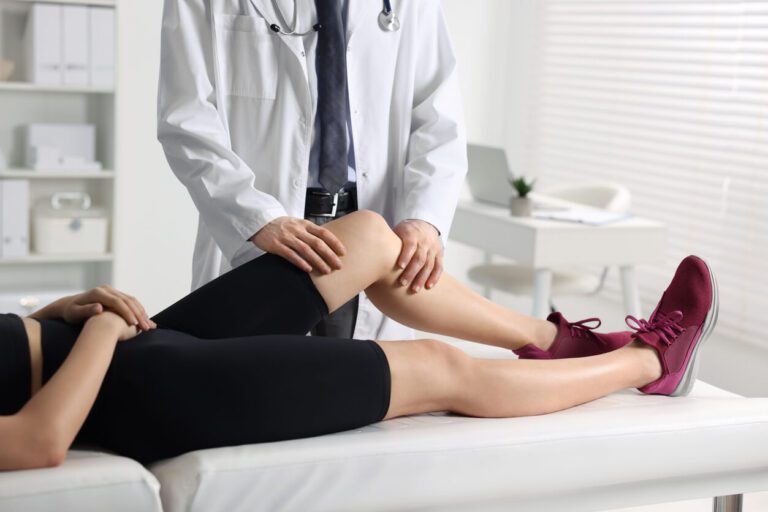
Knee injuries can happen suddenly, like a ligament tear, or develop slowly over time. Seeing a sports medicine doctor near you early helps you get an accurate diagnosis and a personalized treatment plan.
In short,
- Getting an expert diagnosis early helps prevent long-term joint damage and ensures your knee heals correctly.
- Sports medicine specialists focus on protecting your joints and designing a recovery plan tailored to your needs.
- How your body moves, your daily habits, and sudden injuries can all make your joints more vulnerable to damage.
Scheduling an appointment with a local sports medicine doctor at the first sign of pain is a crucial step toward a full recovery. Seeking professional care early can prevent minor joint issues from turning into chronic, long-term mobility limitations. It also helps you avoid compensation injuries that happen when you alter how you walk to protect a hurting knee.
What Are Knee Injuries?
As one of the largest and most complex joints in your body, the knee absorbs the impact of every step, jump, and turn. According to Johns Hopkins, everyday movements like kneeling, lifting, and running put constant stress on this vulnerable joint.
Because your knees carry so much daily weight, even minor misalignments or small injuries can quickly worsen under pressure.
Getting a professional evaluation at the first sign of discomfort is the best way to protect your mobility and prevent permanent joint damage. A timely, expert diagnosis supports a faster and more complete healing process, helping you avoid chronic pain and long-term limitations.
Understanding Knee Joint Anatomy
The knee is a complex hinge joint that brings together three primary bones:
- Femur (thighbone)
- Tibia (shinbone)
- Patella (kneecap)
These bones must align and interact perfectly to allow you to walk, run, and bend without pain.
To keep these bones securely in place, tough bands of tissue called ligaments act as the joint’s main stabilizers. Key ligaments like the anterior cruciate ligament (ACL) and medial collateral ligament (MCL) prevent the knee from shifting or twisting unnaturally during physical activity.
Slippery articular cartilage covers the ends of the bones, while two rubbery wedges of tissue called menisci act as crucial shock absorbers. Together, they cushion the joint and absorb the daily impact of your steps, jumps, and turns.
Common Types of Knee Trauma
Knee injuries generally fall into two main categories depending on how the damage occurs.
Acute Knee Injuries
Acute injuries happen suddenly, often from a hard impact, a sudden twist, or an awkward landing. These unexpected events can cause immediate damage, such as ligament tears, meniscus tears, or bone fractures. You will usually feel sharp, immediate pain, followed by rapid swelling and difficulty putting weight on your leg.
Overuse Knee Injuries
Unlike sudden trauma, overuse injuries develop slowly over time. Repetitive motions like running or jumping place continuous stress on the knee joint without giving the tissues time to heal. This gradual wear and tear can lead to painful inflammatory conditions like tendinitis or runner’s knee.
Degenerative Knee Conditions
Degenerative conditions like osteoarthritis happen when the protective cartilage inside your joint wears down over time. As this cartilage thins, your bones can rub directly against each other. This friction causes ongoing pain, stiffness, and limited movement that usually gets worse over time.
Causes and Risk Factors
Your daily habits and your body’s natural structure both play a major role in how vulnerable your knee joints are to pain and injury. Physical factors like your unique bone alignment, muscle strength, and genetics can put extra pressure on your joints.
At the same time, everyday activities like high-impact exercise, repetitive movements at work, or even wearing worn-out shoes can gradually wear down the joint.
- Biomechanical and Anatomical Triggers: Poor leg alignment places uneven stress on the joint, while muscle imbalances and past injuries increase your risk of future damage.
- Activity and Lifestyle Influences: High-impact sports with quick pivots increase your risk of ligament tears, while overtraining, worn shoes, and poor form add unnecessary stress to your joints.
- Demographic and Health-Related Variables: While joint cartilage naturally wears down with age, carrying extra body weight increases the daily physical load on your joints.
Signs and Symptoms of Knee Damage
The symptoms you experience can look very different depending on how the damage to your knee occurred. A sudden, traumatic injury often causes immediate, sharp pain and rapid swelling, while chronic wear and tear tends to develop slowly over months or years.
Understanding these differences helps determine whether you are dealing with a new, acute injury or a long-term, progressive condition.
Acute Indicators of Severe Trauma
Hearing or feeling a sudden, loud “pop” inside your knee during physical activity is a common sign of an anterior cruciate ligament (ACL) tear. This sound often occurs during sudden pivots, sharp turns, or direct impacts, and it is typically followed by a feeling that the knee is giving out.
When severe swelling develops rapidly within a few hours of the injury, it usually indicates bleeding inside the joint. This rapid buildup of fluid causes intense pressure, making it highly painful to bend your knee or put any weight on your leg.
Chronic and Overuse Warning Signs
When your knee joint begins to wear down over time, it often sends subtle but persistent warning signs. You might experience ongoing aches, a stiff joint that is hard to move in the morning, or a noticeable loss in your normal range of motion.
Some people also notice a catching or locking sensation, which happens when the joint does not move smoothly during everyday activities.
Red Flag Symptoms Requiring Urgent Attention
Some symptoms indicate a severe medical emergency. Seek immediate care at an emergency room or urgent care clinic if you notice:
- A visible deformity in your knee
- A lower leg and foot that feel numb, pale, or cold to the touch
- A high fever accompanied by a hot, swollen, and red joint, which may indicate a serious infection
Diagnosis of Knee Conditions
To find the exact cause of your knee pain, a sports medicine doctor near you uses a comprehensive evaluation process. This approach typically combines a hands-on physical examination with advanced diagnostic technology to get a clear picture of your joint health.
By looking at both your physical symptoms and the internal structures of your knee, your care team can pinpoint the precise issue. This detailed assessment ensures you receive an accurate diagnosis and a highly personalized treatment plan.
- Physical Examination Procedures: Your provider will review your medical history, check for tender areas, and perform gentle tests to evaluate your joint’s stability.
- Advanced Imaging Technologies: X-rays check for bone fractures, while MRIs provide detailed images of your soft tissues.
- Functional and Biomechanical Testing: These tests analyze how you walk and measure your strength to find movement imbalances and muscle weakness.
Treatment Options for Knee Injuries
Modern treatment plans focus on conservative, non-surgical options first to help you heal naturally and avoid unnecessary procedures. Your care team will typically recommend surgery only if you have severe joint damage or if other treatments do not relieve your pain.
This approach ensures you receive the least invasive care possible while still achieving the best recovery outcomes.
Conservative and Non-Surgical Management
The R.I.C.E. method (Rest, Ice, Compression, and Elevation) is often the first step to help reduce pain and control swelling immediately after an injury. Once the initial inflammation goes down, targeted physical therapy can help you rebuild the supporting muscles around your knee.
This structured exercise program focuses on restoring your range of motion and improving joint stability for long-term recovery.
Surgical Interventions and Repair
When non-surgical treatments are not enough, several surgical options can help restore your mobility and relieve pain:
- Arthroscopic Surgery: Minimally invasive arthroscopic surgery uses a tiny camera and small incisions to precisely repair or trim damaged cartilage.
- Ligament Reconstruction: For severe ligament tears, reconstruction using tissue grafts can rebuild the ligament and restore knee stability.
- Joint Replacement: For advanced wear or severe arthritis, a partial or total joint replacement can relieve chronic pain and restore function.
Physical Therapy for Knee Recovery
Working with a licensed physical therapist provides you with a customized recovery plan tailored to your specific injury and goals.
These supervised sessions focus on targeted exercises that rebuild strength in the muscles supporting your knee joint. Over time, this training restores your balance, improves flexibility, and helps you safely return to your favorite sports and daily activities.
Prevention and Lifestyle Modifications
Taking time to condition your body before jumping into intense activities is one of the best ways to protect your joints. Proactively building strength and flexibility prepares your knees to handle the physical demands of daily life and exercise.
This consistent preparation helps you move more safely and reduces your risk of sudden injuries.
- Smart Training and Conditioning: Dynamic warm-ups, cross-training, and core exercises build strength to stabilize and protect your joints.
- Supportive Gear and Safe Environments: Wearing supportive shoes, exercising in safe spaces, and using braces help minimize stress on your joints.
- Simple Steps to Protect Your Knees: Protect your knees by staying hydrated, maintaining a healthy weight, and gradually increasing your workout intensity.
Frequently Asked Questions (FAQ)
Navigating joint pain or a sudden sports injury can be overwhelming. To help you make informed decisions about your recovery and know when to see a sports medicine doctor near you, we have answered some of the most common questions below.
What is the primary difference between seeing a general physician and a sports medicine doctor near me?
While general physicians manage overall health, sports medicine doctors have specialized training in muscles, bones, and joints. They focus on non-surgical care, advanced diagnostics, and personalized rehab to help you safely regain full mobility.
Can a sports medicine doctor near me treat knee injuries without recommending surgery?
Yes. Sports medicine doctors prioritize non-surgical care first. Most knee injuries—including sprains, meniscus tears, and overuse issues—respond well to physical therapy, bracing, and targeted injections. Surgery is typically only considered for severe injuries or when other treatments do not provide relief.
What symptoms indicate that I should schedule an appointment with a sports medicine doctor near me?
You should schedule a specialist evaluation if you experience knee pain that lasts longer than a few days, recurring joint swelling, severe stiffness, pain when bending or bearing weight, or mechanical symptoms like catching, locking, or feeling like your knee is giving out.
Schedule an Evaluation with a Sports Medicine Doctor Near You in Ft. Lauderdale, FL
Seeing a sports medicine doctor near you early for a knee injury can make all the difference in your recovery and long-term mobility. With a specialist’s expertise, you’ll receive an accurate diagnosis, a treatment plan tailored to your needs, and guidance to protect your joints for years to come.
If you’re experiencing knee pain or injury symptoms, schedule your evaluation with Paul Meli Orthopedics in Ft. Lauderdale, FL. Call (954) 324-7711 or request your appointment online and take the first step toward lasting relief and healthy movement.