

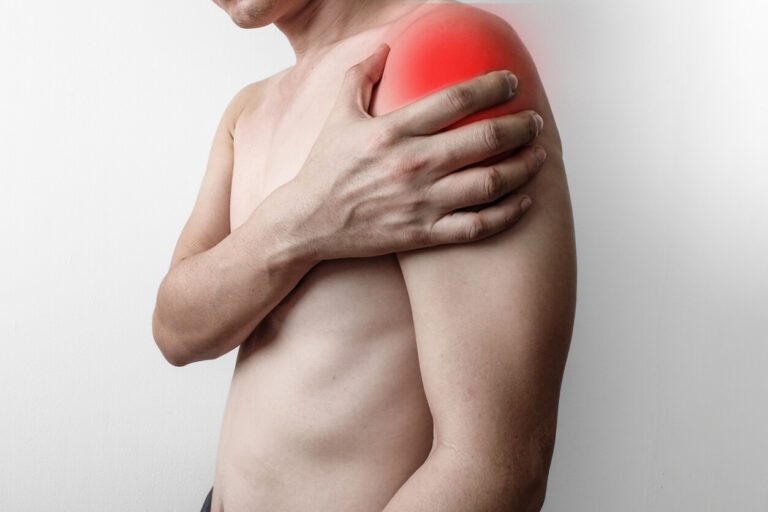
In short, a rotator cuff tear can cause pain, weakness, and difficulty with arm movements. Here are three key signs to look out for before seeking rotator cuff tear treatment:
- Shoulder Pain: Persistent pain, especially when lifting your arm or performing overhead activities, is a common indicator.
- Weakness in the Arm: Noticeable weakness in the shoulder or arm, making it hard to perform everyday tasks like lifting or carrying objects.
- Limited Range of Motion: Difficulty moving your arm fully, accompanied by stiffness or discomfort during motion.
Shoulder pain can make simple tasks feel impossible. Reaching for a high shelf, brushing your hair, or even trying to sleep can suddenly become a painful struggle. If you experience persistent shoulder pain and weakness, you might be dealing with a rotator cuff tear.
Rotator cuff tears cause significant discomfort and restrict your arm movement. They happen for many reasons, ranging from sudden sports injuries to gradual wear and tear over decades. Finding the right rotator cuff tear treatment early helps manage the pain, restore your shoulder function, and prevent further joint damage.
Understanding Rotator Cuff Tears
Your shoulder is a complex joint that moves in almost every direction. This flexibility comes with a trade-off: a higher risk of injury. Understanding how your shoulder works and why early care matters will help you make smart decisions about your recovery and long-term health.
What Exactly Is a Rotator Cuff Tear?
The rotator cuff is a group of four muscles and their connected tendons. These tissues surround your shoulder joint, keeping the upper arm bone (humerus) firmly inside the shallow socket of the shoulder. They also give you the strength to lift and rotate your arm.
A rotator cuff tear happens when one or more of these tendons is damaged. Medical professionals generally classify these tears into two categories:
- Partial tears: Also referred to as an incomplete tear, this occurs when the tendon suffers damage but remains partially attached to the bone.
- Full-thickness tears: Also known as a complete tear, this is when the tendon fully detaches from the bone, often signaled by a sudden “pop” after an injury.
Common Causes and Risk Factors
Shoulder injuries happen for dozens of reasons. Knowing the root cause of your pain helps your doctor design an effective recovery plan.
Acute Injuries vs. Degenerative Wear
Sudden, acute rotator cuff tears often result from distinct events. Falling onto an outstretched arm, taking a direct hit to the shoulder, or jerking heavy objects can overload the tendons and cause them to snap.
Degenerative tears develop slowly over time. Because we use our shoulders constantly, the tendons experience continuous stress. As we age, blood flow to the rotator cuff tendons naturally decreases, making it harder for the body to repair minor daily damage.
Conditions like shoulder impingement, where bone spurs rub against the tendons, also speed up this gradual wear and tear.
Who Is Most at Risk?
Several factors increase your chances of experiencing a shoulder tear:
- Age: According to the Mayo Clinic, tears happen most often in people over 50 due to natural tendon aging.
- Occupation: Jobs requiring repetitive overhead activities, such as painting, carpentry, or construction, put extra stress on the shoulders.
- Sports: Athletes who repeatedly use overhead arm motions, like tennis players, baseball pitchers, and swimmers, face higher risks.
- Lifestyle and Health: Poor posture, smoking (which reduces blood flow to tendons), and conditions like diabetes weaken connective tissues.
Recognizing the Signs and Symptoms
Spotting the symptoms of a rotator cuff tear early allows you to start treatment before the damage worsens. Symptoms vary depending on the severity of the injury, but a few key signs should prompt you to seek medical help.
Key Symptoms to Watch For
The most prominent symptom is a deep, dull ache in the shoulder. This pain often radiates down the outside of your arm. You will likely notice the pain gets much worse when you lift your arm overhead or reach behind your back to fasten clothing.
Other common signs include:
- Pain that disrupts your sleep, especially if you lie on the injured side.
- Pronounced weakness in your arm, making it difficult to lift everyday objects.
- A clicking, popping, or grating sound when you move your shoulder.
- General stiffness and a reduced range of motion.
When to Seek Medical Attention
Do not ignore severe shoulder pain. Seek immediate medical attention if you experience sudden pain after an injury or find yourself completely unable to lift your arm.
You should also consult a doctor if mild shoulder pain or weakness fails to improve after a few days of rest, ice, and over-the-counter medication. When pain disrupts your work, sleep, or daily routine, a professional evaluation becomes necessary. Early diagnosis points you toward the right rotator cuff tear treatment and prevents irreversible muscle weakness.
How Doctors Diagnose Shoulder Injuries
Accurate diagnosis lays the foundation for effective rotator cuff tear treatment. Your doctor will begin with a physical exam. They will press on different parts of your shoulder to find the exact source of the pain. They will also move your arm into various positions to test your range of motion and arm strength.
To confirm the diagnosis, your doctor will likely order imaging tests:
- X-rays: While X-rays do not show soft tissue tears, they reveal bone spurs, arthritis, or fractures that might cause your symptoms.
- Ultrasound: This quick test uses sound waves to check the tendons as you move your shoulder, allowing the doctor to compare the injured side to the healthy side.
- MRI (Magnetic Resonance Imaging): An MRI provides highly detailed images that show exactly where the tear is, how large it is, and whether the tear is old or new.
Exploring Rotator Cuff Tear Treatment Options
Once your doctor confirms the diagnosis, they will help you choose the best rotator cuff tear treatment for your specific situation. Treatment plans depend heavily on your age, overall health, activity level, and the severity of the tear.
The primary goals are always to eliminate pain, restore your shoulder’s function, and prevent further deterioration.
Non-Surgical Treatments
Doctors recommend conservative, non-surgical treatments first for most partial tears and for patients with lower activity levels. Many people experience significant pain relief and improved function without ever needing surgery.
Standard non-surgical treatments include:
- Rest and Activity Modification: Avoiding overhead activities and wearing a sling temporarily gives your shoulder time to heal.
- Medications: Over-the-counter nonsteroidal anti-inflammatory drugs (NSAIDs) like ibuprofen help reduce swelling and relieve pain.
- Physical Therapy: A physical therapist will teach you specific exercises to strengthen the surrounding shoulder muscles. Strengthening the healthy muscles relieves pressure on the torn tendon.
- Steroid Injections: If physical therapy and oral medications fail to provide relief, a doctor might inject a local anesthetic and a corticosteroid directly into the shoulder joint to temporarily block pain and reduce inflammation.
Surgical Treatments
If conservative treatments do not relieve your pain after a few months, or if you have a large full-thickness tear, your doctor might recommend surgery.
Surgery is also a common rotator cuff tear treatment for young, active individuals who want to return to demanding sports or heavy labor. According to Brown University, between 400,000 and 500,000 rotator cuff repairs are performed each year in the United States alone.
Surgical options include:
- Arthroscopic Tendon Repair: The surgeon inserts a tiny camera and tools through small incisions to reattach the torn tendon to the bone.
- Open Tendon Repair: For very large or complex tears, the surgeon makes a larger incision to manually reattach the tendon.
- Tendon Transfer: If the torn tendon is too damaged to reattach, surgeons may use a nearby tendon as a replacement.
- Shoulder Replacement: In cases of massive tears and severe arthritis, a reverse total shoulder replacement surgery provides a new artificial joint.
Recovery Timeline and Rehabilitation
Recovery from a rotator cuff tear takes time and patience. Even with the best rotator cuff tear treatment, healing does not happen overnight.
Non-Surgical Recovery
If you pursue non-surgical treatments, physical therapy usually lasts for six to twelve weeks. You will need to commit to doing your prescribed stretches and exercises at home daily.
Surgical Recovery
Surgical recovery follows a strict timeline:
- First 4-6 weeks: You will wear a specialized sling to keep the shoulder completely immobilized.
- Weeks 7-8: You will begin gentle passive physical therapy, where a therapist moves your arm for you.
- Weeks 8-12: Active physical therapy begins, where you start to move the arm yourself.
- 6-9 months: Most patients achieve a full recovery and can return to all normal activities.
Can You Prevent a Rotator Cuff Injury?
While you cannot stop the natural aging process, you can take steps to protect your shoulders from unnecessary strain.
To prevent shoulder injuries:
- Perform regular shoulder stretches: Keep the joint flexible.
- Strengthen your back and shoulder muscles: Focus on the small stabilizing muscles, not just the large chest muscles.
- Maintain good posture: Slouching pushes your shoulders forward, reducing the space for your rotator cuff tendons to glide smoothly.
- Take frequent breaks: If your job requires repetitive overhead lifting, step away frequently to rest your arms.
Frequently Asked Questions (FAQs)
Below you’ll find answers to some of the most common questions about rotator cuff tears and their treatment.
How do I know if I have a rotator cuff tear?
Common signs of a rotator cuff tear include persistent shoulder pain, weakness in the arm, difficulty lifting or rotating your arm, and reduced range of motion. If you experience any of these symptoms, it’s important to schedule an evaluation to determine the cause and start appropriate treatment.
What are the treatment options for rotator cuff tears?
Rotator cuff tear treatment ranges from non-surgical methods such as physical therapy, medication, and corticosteroid injections to surgical interventions in more severe cases.
At Paul Meli Orthopedics, we create tailored treatment plans based on the specific needs and severity of each patient’s condition.
Can a rotator cuff tear heal on its own?
While some minor rotator cuff injuries may improve with rest and conservative care, full-thickness tears typically do not heal on their own. Early assessment and intervention are essential to avoid further damage and to restore shoulder function effectively.
Where Can I Find Rotator Cuff Tear Treatment in Ft. Lauderdale, FL?
Don’t let shoulder pain disrupt your life. At Paul Meli Orthopedics, we believe early intervention offers the best chance for a fast, complete recovery. Our team provides comprehensive evaluations and personalized rotator cuff tear treatment plans designed to get you back to doing what you love.
Ready to start your recovery? Call us at (954) 324-7711 or use our online form to request an appointment today.